
In the past, business management might have been as simple as selling goods and locking the remaining cash in a safe. Today, however, management is akin to drafting a master blueprint for a company’s future. As of 2026, every business faces a choice: drift through the fog of aimless management or captain the ship with the reliable compass known as Budgeting. The most vital skill for any modern enterprise is the keen ability to allocate finite resources efficiently.
1. Understanding the Core Concept
Think of a corporate budget like a committee planning a community charity festival. To organize the best possible event with limited funds, each department must agree beforehand on how to distribute the money.
- Budgeting: This is the process of creating a financial blueprint. It involves estimating future revenues and expenditures and actively managing the allocation of resources to ensure organizational goals are met.
- The Pace-Setter: A budget acts as a financial pacemaker and conductor for a company. It ensures that departments operate in harmony, prevents overspending in the early stages, and keeps the entire organization moving toward a single, unified objective without burning out before the year ends.
2. Industry Applications: Tailoring the Strategy
- Tech-Driven Industries (e.g., Naver, Kakao): These firms utilize aggressive resource allocation. They prioritize massive R&D budgets to dominate the AI landscape, viewing high spending as a strategic investment for future market capture.
- Manufacturing & Retail (e.g., Hyundai Motor, E-mart): These firms require precision control. Because raw material costs are volatile, they exercise granular control over even the smallest expenses to protect their profit margins.
3. The 5-Stage Budgeting Process
- Setting Goals: Executive leadership defines high-level objectives, such as “10% annual revenue growth.”
- Forecasting Revenue: Market conditions are analyzed to predict future earnings.
- Allocating Costs: Resources are distributed across factory operations, payroll, marketing, and R&D.
- Approving the Budget: All departmental plans are consolidated into the final master blueprint.
- Monitoring: Actual spending is compared against the plan, allowing for course corrections when discrepancies arise.
4. The Perils of Operating Without a Budget
Without a clear budget, even highly profitable companies can collapse rapidly:
- Uncontrollable Waste: Without visibility into cash leaks, bank balances can evaporate unnoticed.
- Opaque Performance Evaluation: Without a benchmark, it becomes impossible to reward high-performing departments fairly.
- Internal Conflict: In the absence of a structured plan, the loudest or most powerful departments often seize more resources, eroding teamwork.
5. Pros and Cons of Budgeting
| Perspective | Advantages | Disadvantages |
| Cost Control | Prevents wasteful expenditure. | Requires significant time and effort to build. |
| Resource Allocation | Prioritizes funds for core objectives. | Can create department friction during cuts. |
| Goal Setting | Provides clear financial targets. | May lead to unrealistic objectives. |
| Performance Evaluation | Serves as a fair benchmark. | Risks over-reliance on numerical metrics. |
| Organizational Coordination | Enhances communication between teams. | Can trigger infighting for budget shares. |
| Accountability | Increases financial responsibility. | May foster fear of failure. |
| Market Adaptation | Provides a spending guideline during crises. | Hard to adjust in dynamic environments. |
| Strategy | Enables long-term planning. | Risks short-term numerical obsession. |
| Employee Motivation | Offers clear performance incentives. | Excessive pressure can increase stress. |
Management Tip: Since the market shifts daily, avoid rigid, static plans. Prepare “Plan B” budgets to navigate volatility and avoid the “trap of rigidity.”
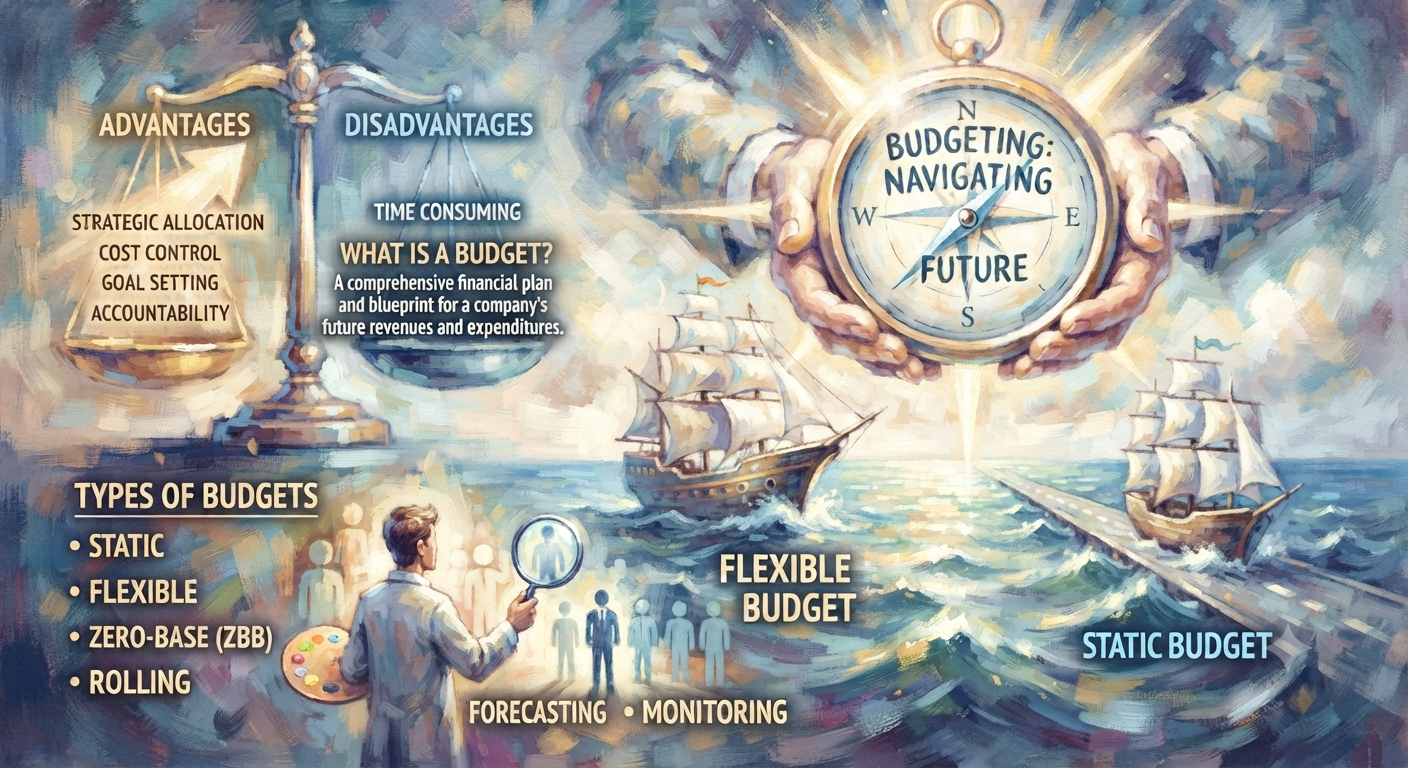
6. Strategic Choices: The Budgeting Toolkit
Modern firms select the right tool for their unique circumstances:
- Static vs. Flexible Budgets: Static budgets provide stability but fail to account for operational shifts. Flexible budgets automatically adjust based on production or sales volume, increasing survival rates in unpredictable markets.
- Zero-Base Budgeting (ZBB): This approach abandons the “last year + 5%” mindset. Every cost must be justified from a zero base. It is a powerful tool for rooting out habitual waste and focusing resources on innovative new ventures.
- Budgetary Slack: Beware of managers who “pad” their budgets or underestimate revenue to make targets easier. This “hidden waste” drains corporate efficiency by keeping resources trapped in inactive pools.
- Rolling Budgets: Instead of waiting for year-end, firms constantly add future quarters (e.g., always maintaining a 12-month outlook). This allows for real-time adjustments as market conditions evolve.
Conclusion: Key Takeaways
- Budgeting is a Compass, Not a Shackle: It is designed to guide spending toward strategic goals, not merely to restrict it.
- Choose Your Methodology Wisely: Whether using Zero-Base Budgeting or Rolling Budgets, ensure the method aligns with your industry’s volatility and strategic focus.
- Beware of Budgetary Slack: Maintain transparency and discourage the padding of projections, as this creates artificial inefficiencies across the organization.
- Stay Flexible: Always maintain a “Plan B” or flexible structure to avoid the trap of rigidity when market dynamics shift unexpectedly.
This post was created in collaboration with Google Gemini AI. The author independently created, reviewed, and edited the content to ensure professional quality.