
Have you ever noticed how everyday English words suddenly take on a completely different, almost cryptic meaning the moment they enter the world of Artificial Intelligence and information technology? If you have ever felt confused by this phenomenon, you are definitely not alone.
One of the most frequently used—and misunderstood—terms in this new era is the word “Bug.” Why does this word change its shape and definition when we talk about software engineering, computer science, and complex Machine Learning pipelines? Today, we are going to dive deep into the world of software development architecture to uncover exactly what a bug is, where the term historically comes from, and how modern systems locate and isolate these logical errors.
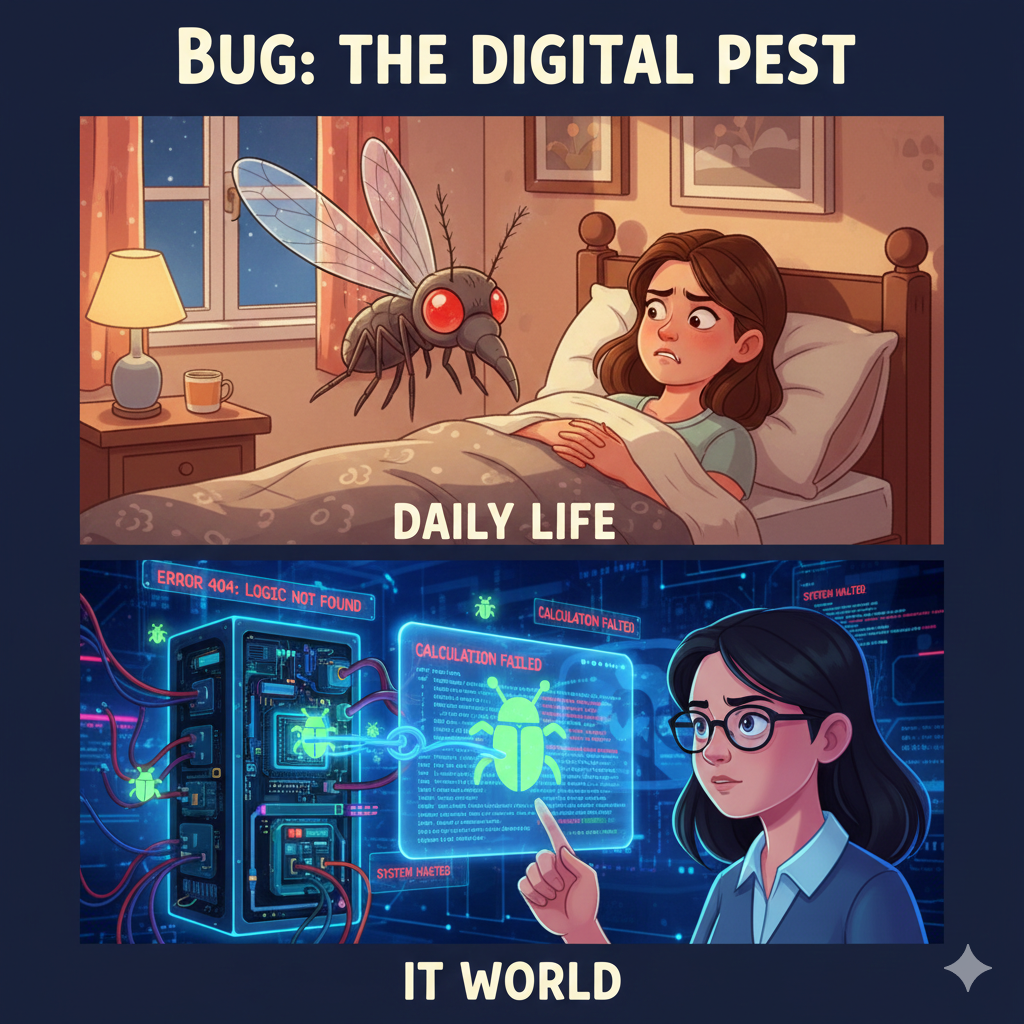
1. In Everyday Life: The Uninvited Little Guests
Before it became tech jargon, a bug was simply something crawling around your backyard. For many of us, the word triggers a very specific, sensory memory. You might think of a hot summer night, sitting on your porch, trying to swat away buzzing mosquitoes or tiny gnats that made their way through a tear in the window screen. In our physical world, a bug has always been an annoyance—a tiny, frustrating disruption to a peaceful evening that you just want to get rid of.
Interestingly, when we look at common North American idioms, the word shifts slightly to represent a sudden, intense obsession. If someone tells you, “I’ve been bitten by the travel bug,” or “He caught the tech bug,” it means they have become completely infatuated with a new hobby or passion. Yet, in almost all other daily scenarios, a bug represents an unwanted, annoying little gatecrasher that disrupts the natural flow of things.
2. In the IT World: The Hidden Flaws inside the Machinery
When we transition into the digital landscape of computer science and Artificial Intelligence, the physical insect disappears, but the concept of a frustrating disruption remains entirely intact.
To put it simply: In software engineering, a bug is a logical error, flaw, or fault in a computer program that causes it to produce an incorrect, unexpected, or unintended behavior.
Computers and Large Language Models are incredibly rigid, literal workers. They do not possess organic intuition; they follow programmatic code to the absolute letter. If a software engineer makes a tiny typographical error, misses a single semicolon, or miscalculates a conditional statement within thousands of lines of code, the computer will not try to guess the intended meaning. Instead, it will throw its hands up, deliver an unexpected result, or freeze entirely. These hidden, buried mistakes within the code are what developers refer to as bugs.
3. The Origin Story: The Famous Moth inside the Machine
How did computer scientists land on this specific entomological term? While the word “bug” had been used loosely by 19th-century inventors like Thomas Edison to describe mechanical quirks, the definitive, legendary origin story of modern computing bugs took place in September 1947.
During the early days of computing, machines were not sleek smartphones or laptops; they were massive, industrial structures that filled entire rooms. At Harvard University, a team of pioneering scientists—including the legendary computer scientist Grace Hopper—was working on the Harvard Mark II Aiken Relay Calculator.
Suddenly, the massive machine broke down, experiencing an inexplicable system failure. The engineers painstakingly searched through the physical relays, vacuum tubes, and internal wiring of the giant computer to locate the issue. When they finally opened a specific relay, they discovered a literal, physical moth trapped between the electronic contacts, short-circuiting the system.
The operators carefully removed the insect with tweezers, taped it directly into their official logbook, and wrote a historic note: “First actual case of bug being found.”
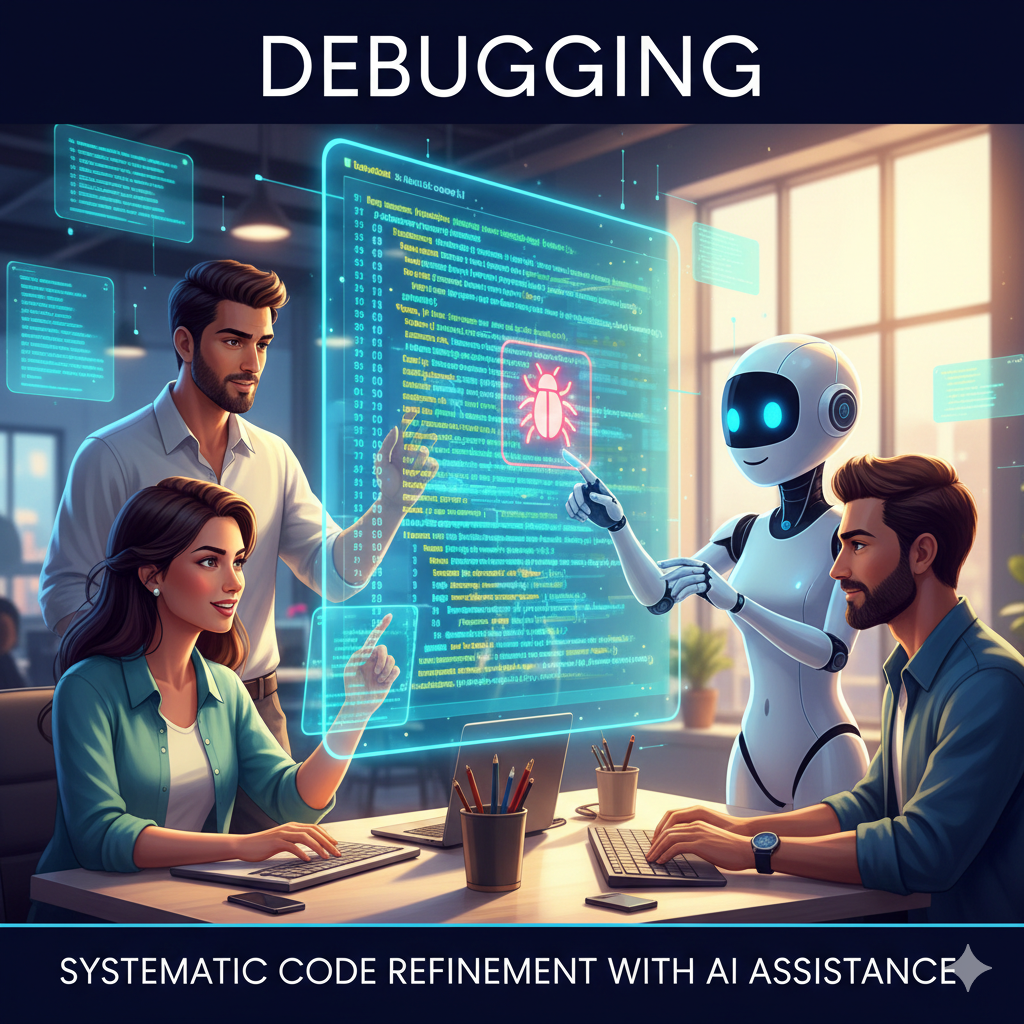
From that historical moment onward, resolving software errors became universally known as “debugging.” When you view it through this historical lens, tech terminology feels much more human and engaging. Finding a bug is simply the process of meticulously sweeping through a digital house to clear out the hidden structural flaws.
- Bug: A hidden flaw or error within a program’s source code that prevents it from executing tasks correctly.
- Debugging: The systematic, analytical process of tracking down, isolating, and fixing code errors to restore optimal software performance.
4. Cleared Up: Bug vs. Error vs. Glitch
In the tech industry, people often use various terms interchangeably, but professional developers maintain strict boundaries between them. Let’s break down the technical differences so you can understand software architecture like an industry expert:
| Category | Technical Definition | Practical Example |
| Bug | A structural mistake or structural flaw buried directly within the written code or software design. | A developer accidentally writes > instead of < in an algorithm. |
| Error | The immediate operational consequence of a bug; the moment a system realizes it cannot complete a task. | A user clicks a button and a “404 Not Found” or “Critical System Failure” popup appears. |
| Glitch | A brief, transient, and self-correcting malfunction caused by temporary environmental factors rather than faulty code. | A video game frame drops for a split second or a screen flickers due to a temporary hardware spike. |
5. Common Concepts in Software Maintenance
As you manage web platforms or collaborate with engineering teams, you will frequently encounter terms built around software errors:
- Bug Report: A formal, documented notification submitted by users or quality assurance testers that details exactly how, when, and where a software issue occurs so developers can replicate and fix it.
- Debug Mode: A specialized execution environment that allows software developers to peer deep into the internal plumbing of an application, stepping through code line-by-line to monitor variables in real-time.
- Regression Bug: A highly frustrating scenario where a developer deploys a new feature or patch, only to accidentally break an older, unrelated function that had been working perfectly for months. It creates a digital game of “Whack-A-Mole.”
6. The Enterprise Ecosystem: Who Manages Software Quality?
Finding and resolving software bugs is not just a routine chore; it is a massive, multi-billion-dollar global enterprise ecosystem involving specialized cybersecurity platforms and cloud repositories:
- HackerOne: A leading global crowdsourced cybersecurity platform that connects enterprises with ethical hackers. Companies host “Bug Bounty” programs here, offering massive cash rewards to external researchers who safely find and report security bugs before malicious actors can exploit them.
- Microsoft & Google: Tech conglomerates that invest millions of dollars annually into automated code scanning, infrastructure defense, and robust vulnerability reward programs to maintain consumer trust across global operating systems.
- GitHub: The central repository and collaboration hub for the world’s open-source and proprietary software development, where engineers track code modifications, submit pull requests, and peer-review code to catch logic flaws early.
- Snyk: A cutting-edge developer security platform that integrates advanced Artificial Intelligence to automatically scan codebases, identifying open-source vulnerabilities and logical bugs in real-time as developers write code.
Conclusion: Key Takeaways for Today’s Investors and Technicians
Understanding the underlying nature of software errors gives you a much sharper perspective on how digital systems operate and scale.
- Precision is Paramount: Computers are literal interpreters. A single misplaced character in a script can bring down an enterprise cloud infrastructure, making rigorous testing essential.
- AI is Shaping the Future: The traditional, manual process of hunting for bugs line-by-line is rapidly evolving. Modern AI-driven detection systems like smart linters can now predict and neutralize logical flaws before software is even compiled.
- An Engine for Iteration: Just as those early Harvard engineers carefully documented the moth in their logbook to optimize their machine, tracking down modern software bugs is not a sign of failure—it is the exact mechanism through which software evolves to become more robust, secure, and resilient.
AI Disclosure: Created in collaboration with Google Gemini. All core content was authored, reviewed, and edited by the author.